Best Buy hero image
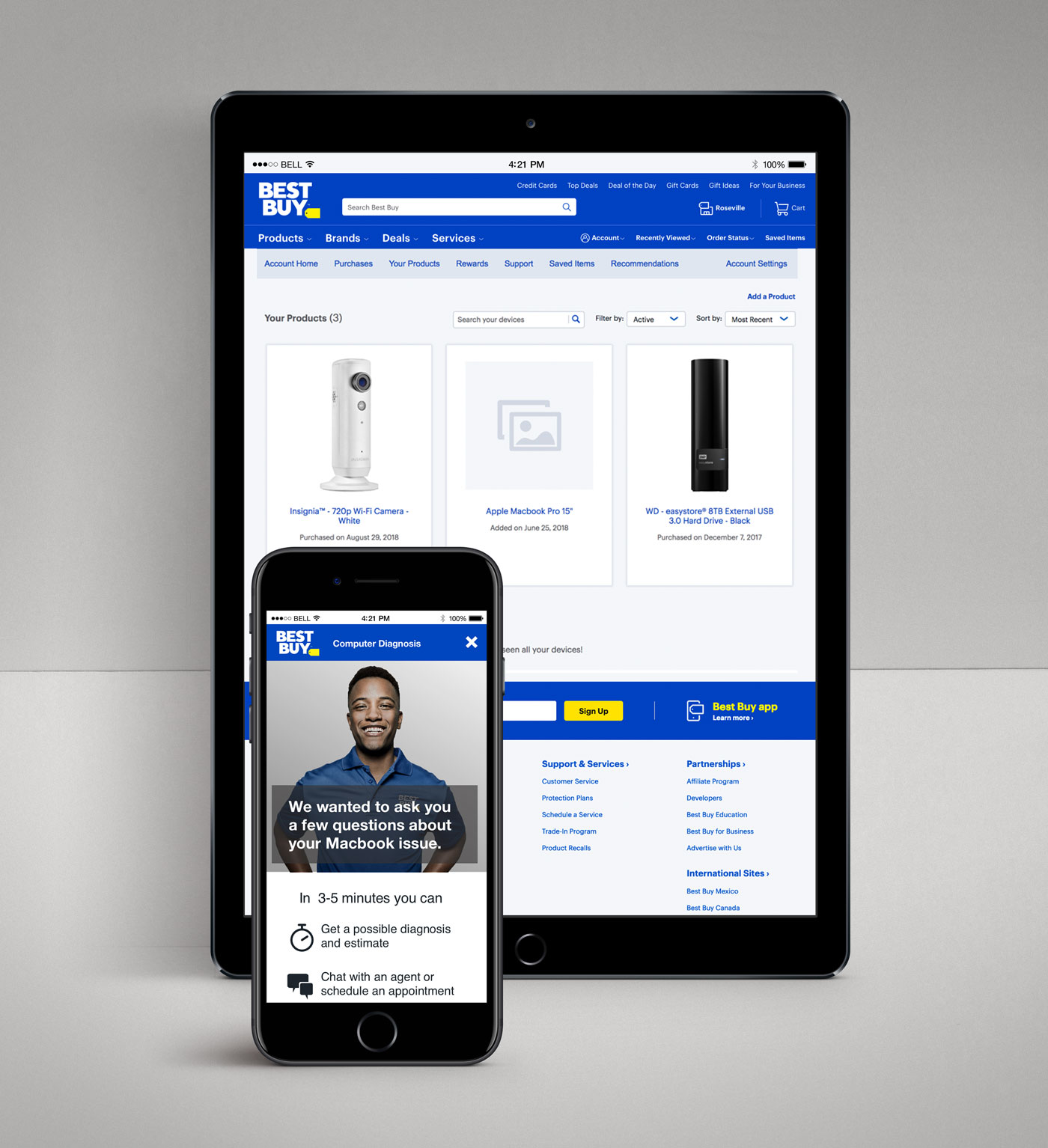
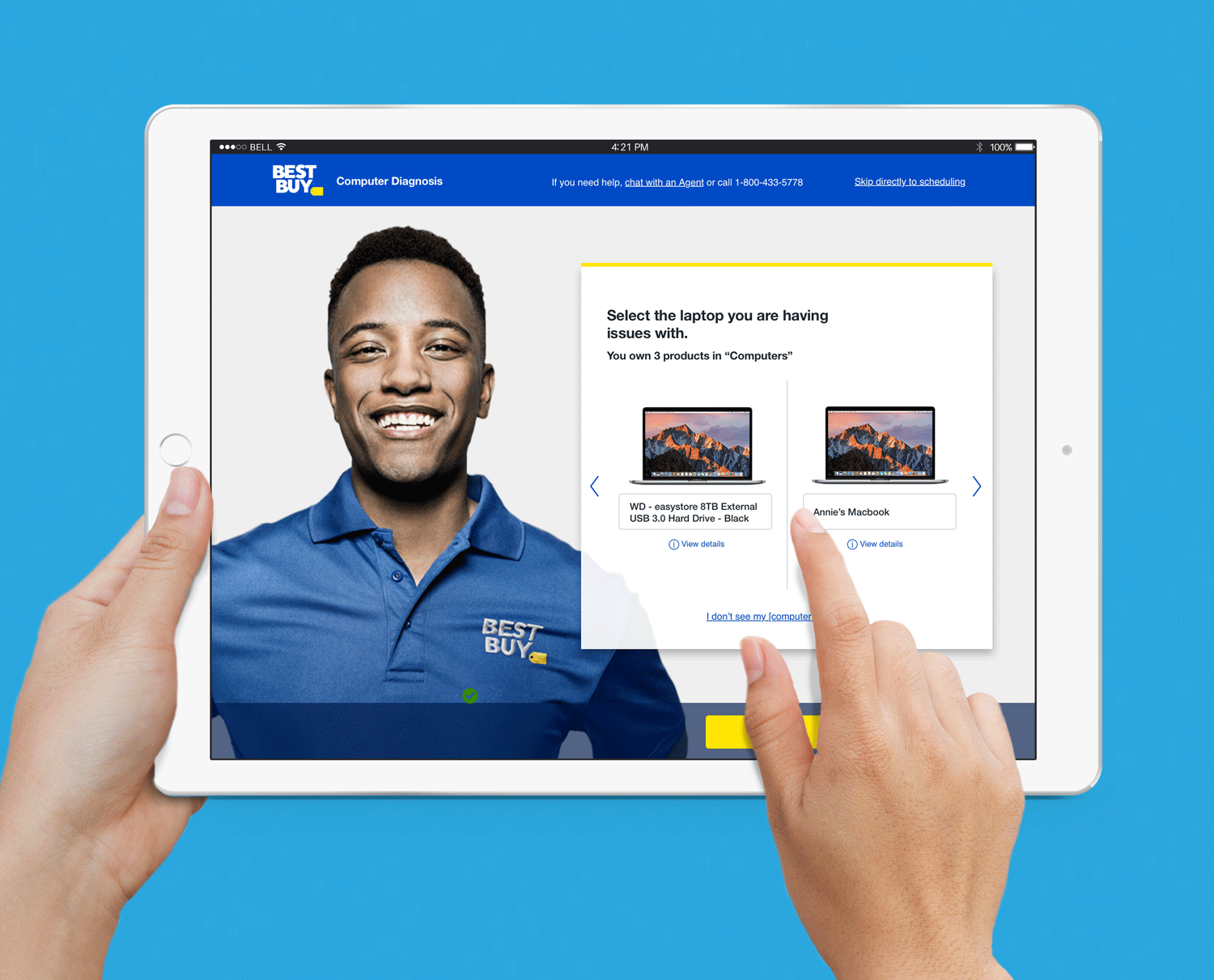
Device Inventory (tablet) and Intro Page (mobile) Device Inventory (tablet) and Intro Page (mobile)
Best Buy — Walkthewall
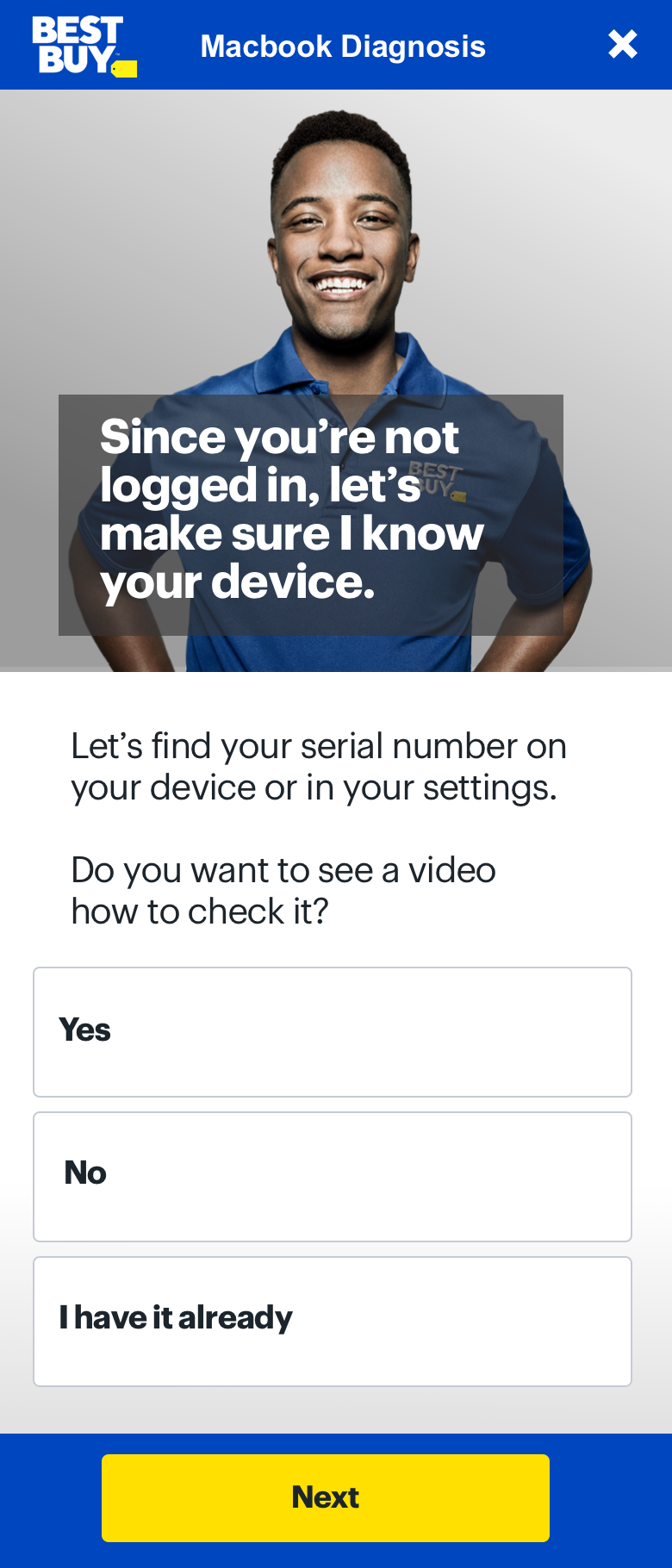
Device selection Device selection
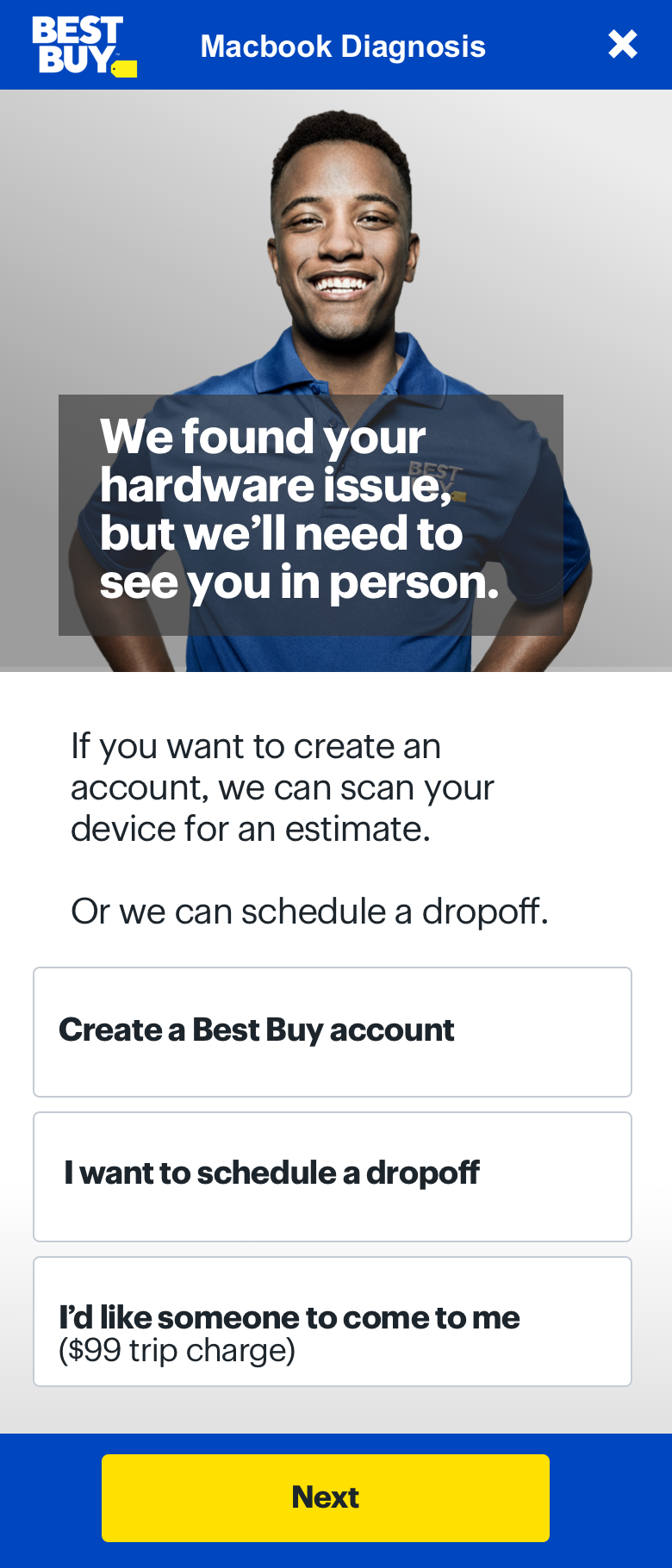
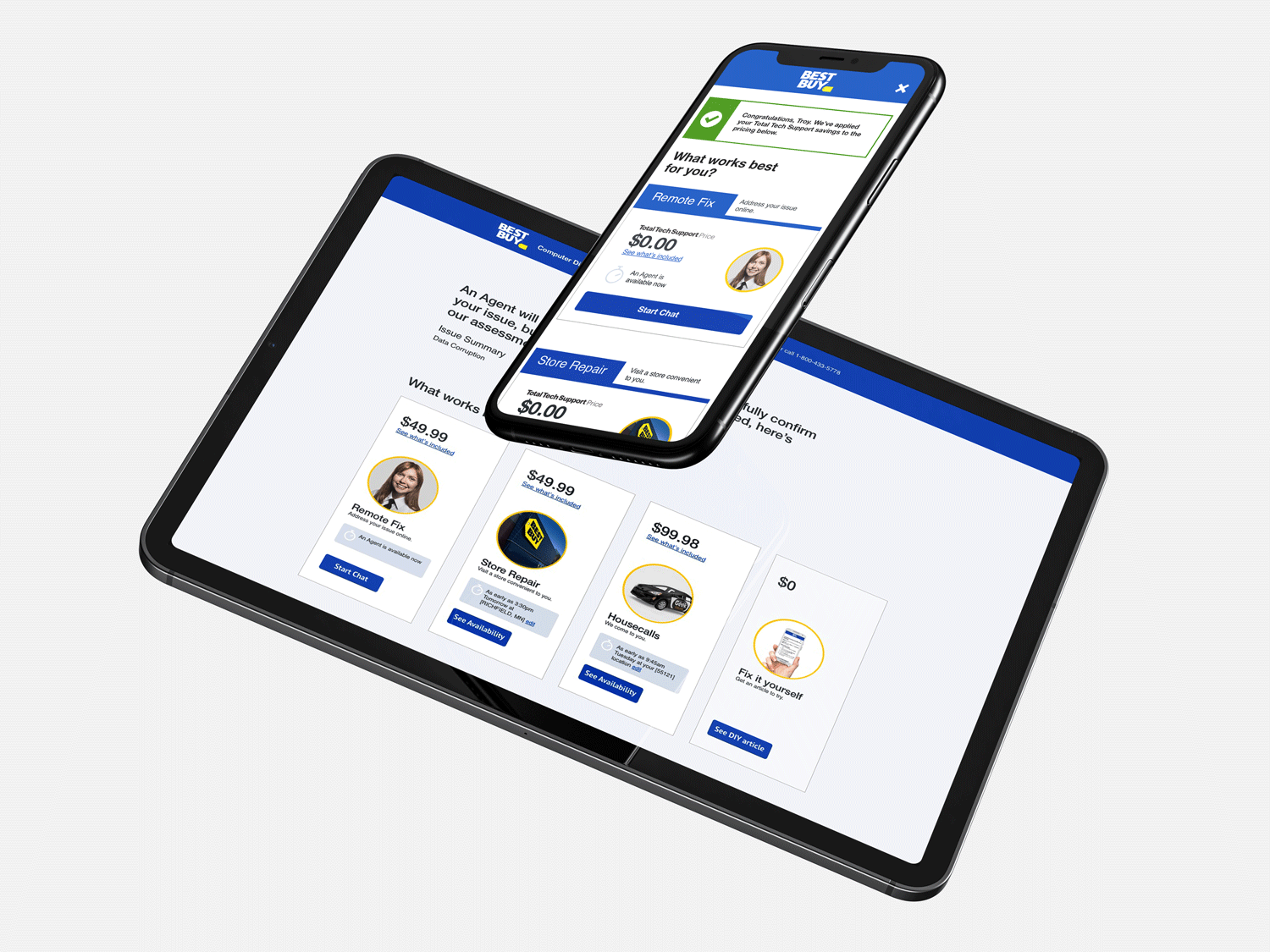
Service Fulfillment Options Service Fulfillment Options

Best Buy

AI-Assisted Self-Diagnosis


Best Buy's AI-Assisted Self-Diagnosis is a fully responsive, concept-to-release microsite embedded in BestBuy.com to help customers self-assess hardware and software issues with the power of Geek Squad's twenty-five years of call transcripts and troubleshooting models.

Outcomes

  • Designed and launched AI-assisted self-diagnosis microsite: Concept-to-release responsive application embedded in BestBuy.com leveraging 25 years of Geek Squad call transcripts. Combined conversational design, machine learning, and automated handling to help customers self-assess hardware/software issues. 12% of customers who started the diagnostic completed the full flow — early evidence of conversational engagement on a browse-and-cart site, and a contributor to reduced Average Handle Time and call volume.
  • Validated product-market fit through targeted research: 80% of test participants said they would use the feature in real-life scenarios. Unmoderated study revealed customers quickly grasped value proposition (reduce wait times, enable self-service) though many were unaware Best Buy offered computer repair services.
  • Created scalable triage framework: MVP focused on laptops, but decision tree, UI patterns, and conversational elements established foundation for all hardware/software products. Application later evolved into triage model used across all Best Buy-supported products.
  • Bridged technical complexity with usability: Worked with technically-savvy BA to map linking APIs and content paths, coached copywriter on conversational design principles, and navigated limited company experience with custom interactions. Advocated for customer-centric enhancements (pricing estimates, trade-in value, repair vs. replace guidance) despite product team's narrow MVP focus.

Live Links

BestBuy.com Triage Site (current version)
Usability Results.pdf
Microinteractions Study.pdf
Conversational Design Study.pdf

The application leverages three facets of artificial intelligence:

  • Conversational Design
  • Machine Learning
  • Automated Handling

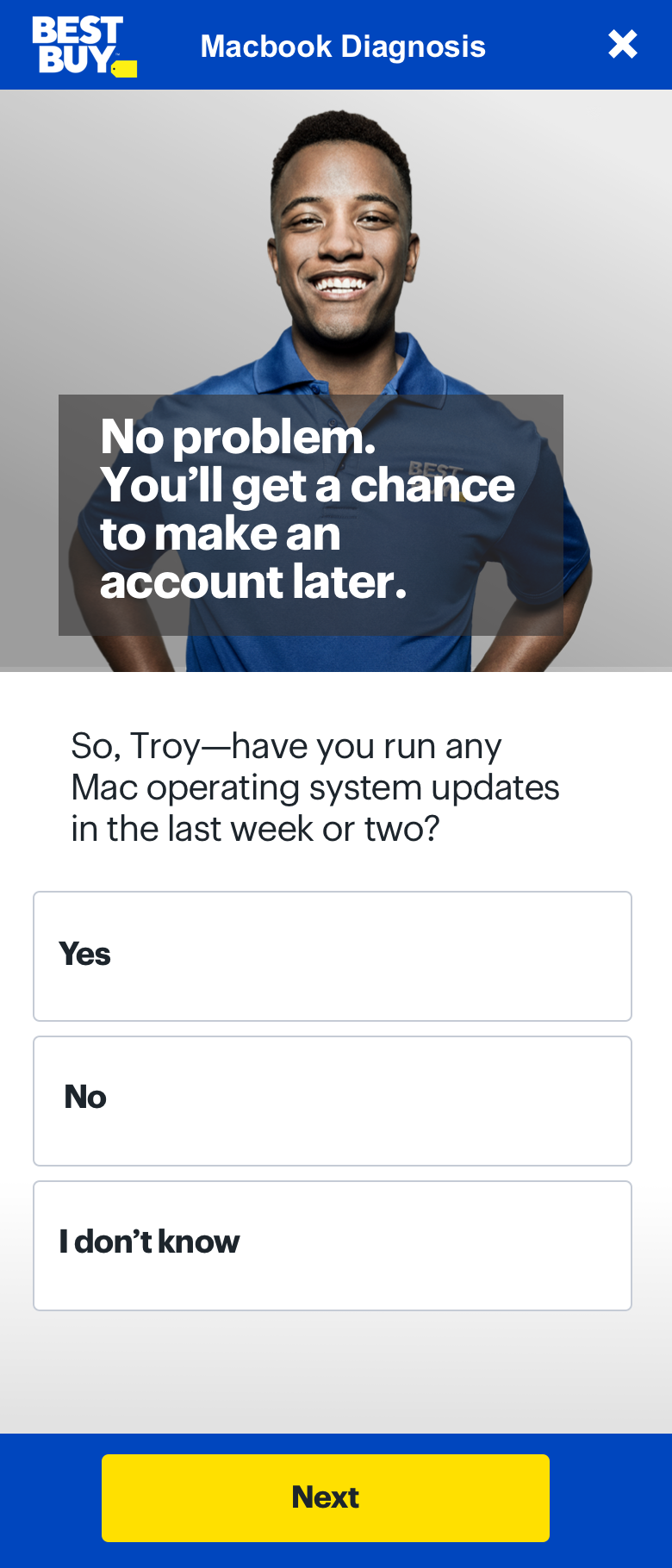
The conversational system, puts customers in control, results in greater issue resolution and satisfaction—but the primary goal was to reduce Best Buy Customer Service's Average Handle Time.

The MVP was only targeted laptops, but the initial decision tree, UI and conversational elements paved the way for all hardware and software products to be triaged through the application.


Objective

Reduce call volume to tech support

Goals

Awareness, Productivity, Engagement, Sales

Research Methodologies

Participants were screened for having a computer or device issue in the past six months, so we could leverage a "true to life" scenario within our test.

  • Competitive Analysis (Services Team)
  • Competitive Analysis (Company-wide)
  • Field Studies with Geek Squad Agents
  • Customer Interviews
  • Unmoderated Remote Usability (Desktop and Mobile)
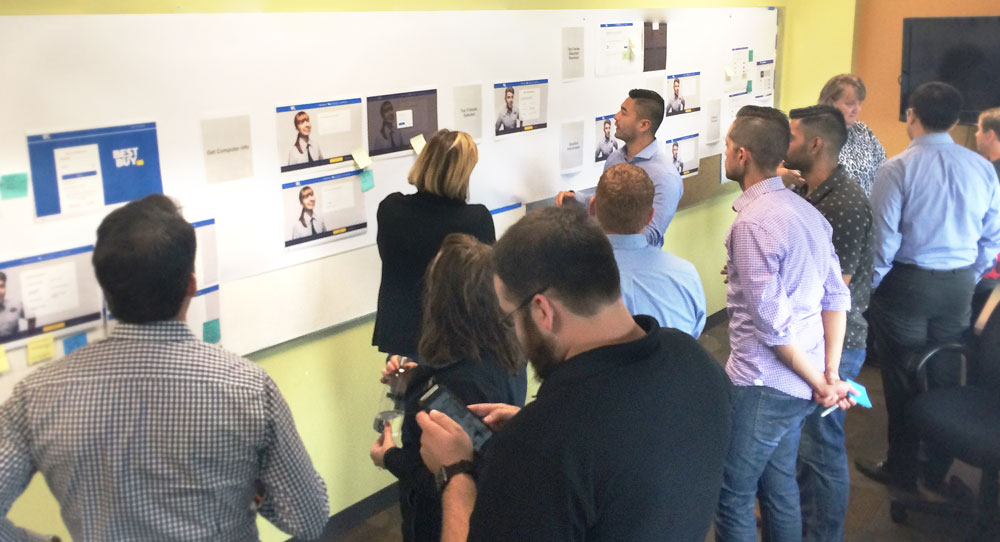
  • "Walk the Wall" / Heuristic Analysis
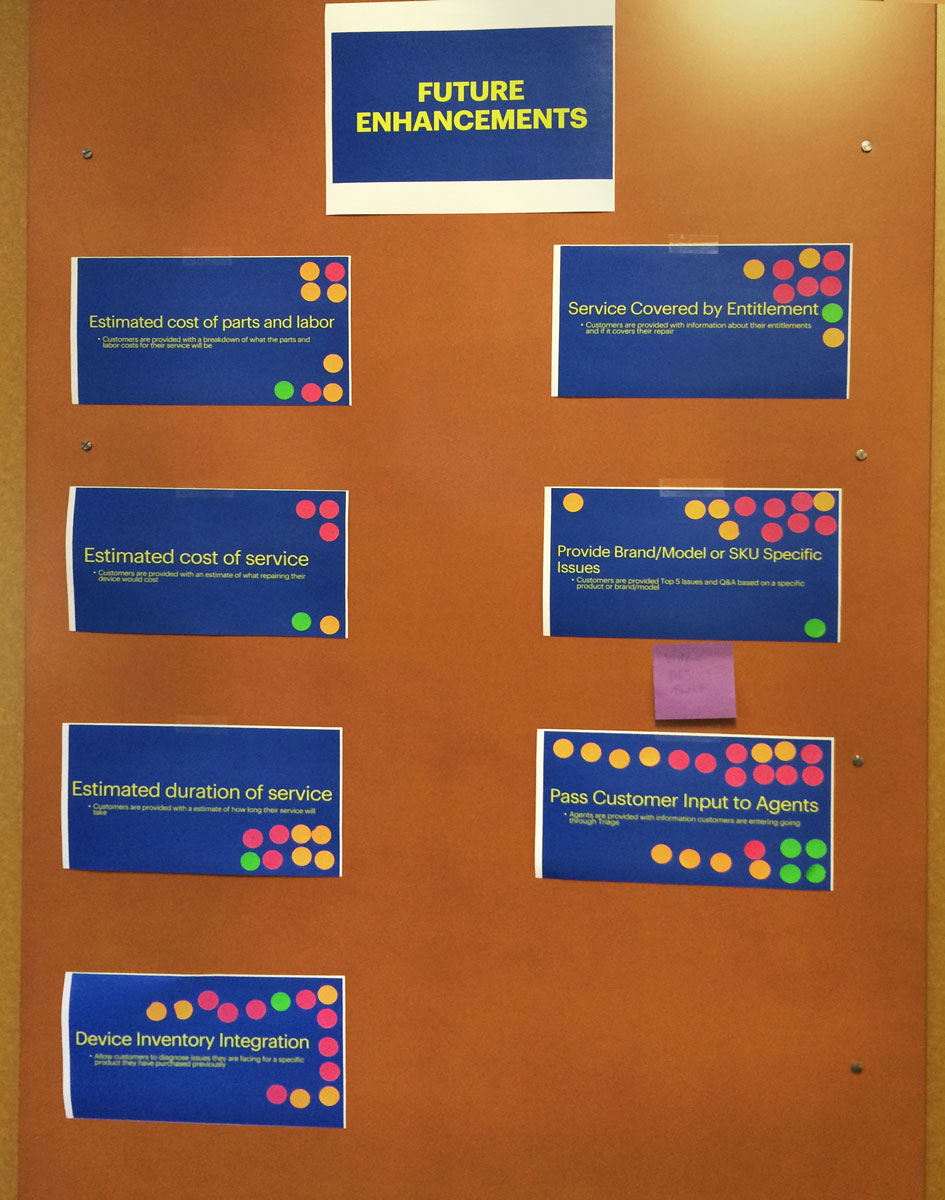
  • Dot Voting

Comparable Products

HelloTech, Ifixit.com, Microsoft Fix It, Virtuwell

Deliverables

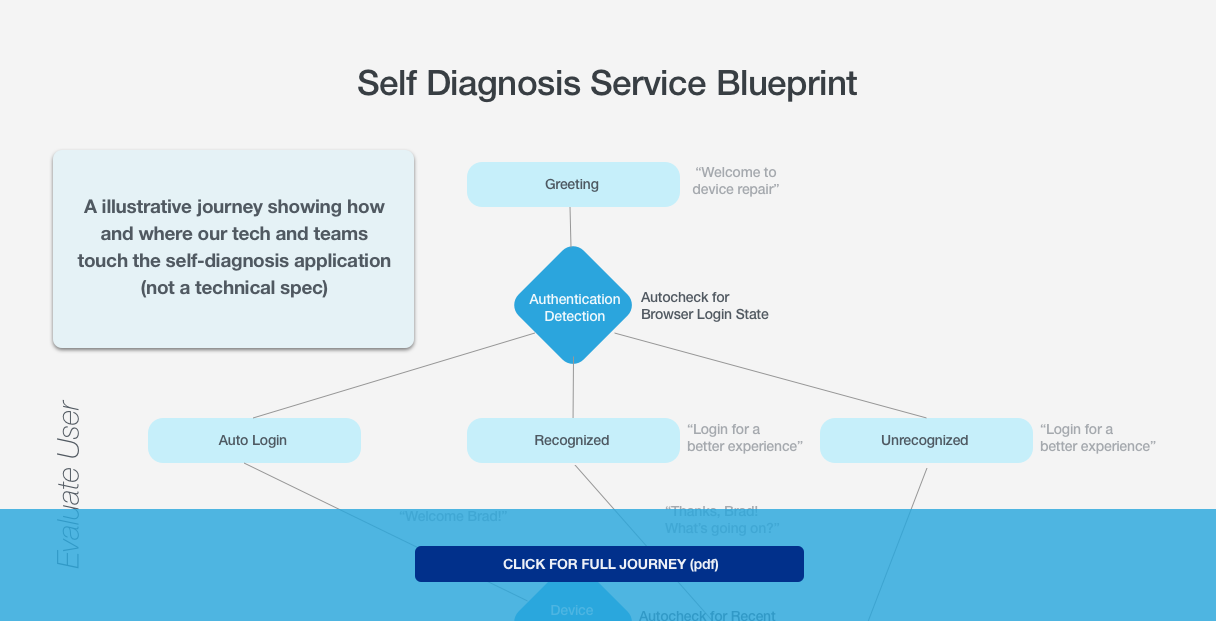
Decision Tree, Technical/API Map, Copy Deck, Wireflows, High-Fidelity Design for Mobile and Desktop

Team

Tech Support/Engineering Lead, UX/UI/Visual Design Lead (myself), UX Research Lead, Business Analyst, Copywriter, Information Architect

Challenges

Many overlapping Product Managers resulted in communication challenges about what content would be available at launch. Once a technically-savvy BA was engaged the linking APIs (like DIY and troubleshooting databases, etc) content paths were clearer to myself and the development team. The technically-focused copywriter was challenged with brand voice and conversational design (I supplemented with coaching, conversational design study, and conversational structures). Overall the product team and company had limited experience with custom interactions.

Other Results

All participants in the unmoderated study quickly identified the rationale behind the application; reduce call volume (top answer—surprisingly), to save customers' time, and encourage self-service. Most participants were not aware that Best Buy did computer repair (which surprised us all on the Services team, both marketing and tech).

The reactions among test users were largely positive. The length of the interaction was considered appropriate, had logically sequenced stages and was easy to complete. However, some participants found the outcomes predictable or "surface level", and expected more in the way of pricing and timing options. Overall, the majority found it useful, and gave them a base understanding of their issue without setting foot in a store.

About 80% of users who tested it said they would use the feature in real-life—a win win for Best Buy and the customer experience.


Next Steps

  • Taxonomy Study
  • Auto-Authentication
  • Analytics Analysis
  • Device Auto-recognition
  • Improve DIY and troubleshooting databases
  • Link appropriate paths to Geek Squad Chat
  • Add pricing and timing estimates
  • Estimate current product's value
  • Revisit UI module for standalone use
  • Reduce login friction
  • Improve fluency of conversational design

Final Analysis

BestBuy.com at the time was browse and buy. I argued for a conversational diagnostic; product leadership wanted a long form. 12% of people who started the triage finished it — a catalyst, and early proof Best Buy could be customer-centric beyond the cart.

At the time, the product managers on this product had limited vision about what this self-diagnosis could do and understand. They were very MVP-focused and if it reduced any call volume it'd have been considered a win for them. Anything outside of that was seen as scope creep. It was early in my UX experience, but found the lack of "big picture" as well as the disinterest in details from the product managers very frustrating.

Unfortunately, it's a very nuanced process to understanding the variety and complexity of users' personal taxonomy and goals. Even more complex, but highly valuable to the customer experience— we missed the opportunity to help the customer with their decision to repair or replace (for example, give the customer their current device's value, Best Buy's trade-in value and show them pricing on new devices.) Attempting to discuss ideas like these with the product managers were immediately stifled and met with hostility.

However, this was precursor to the Best Buy intelligent chat, and this triage application didn't not have the flexibility nor logistics to use natural language processing. It did eventually, with a newly-formed CX team's guidance, roll into a triage model currently used for all Best Buy-supported products.

Supporting Artifacts

Triage (Before) Screenshots.pdf
IA's (Before) Wireframes (password: Triage)
Services Baseline Study.pdf
Facets of AI.pdf
Precise Language for AI.pdf
Date Picker for Responsive Web.pdf
API Tech Flow.pdf
User Journey / Decision Tree.pdf
MVP Question Framework.xls
Dot Voting.jpg