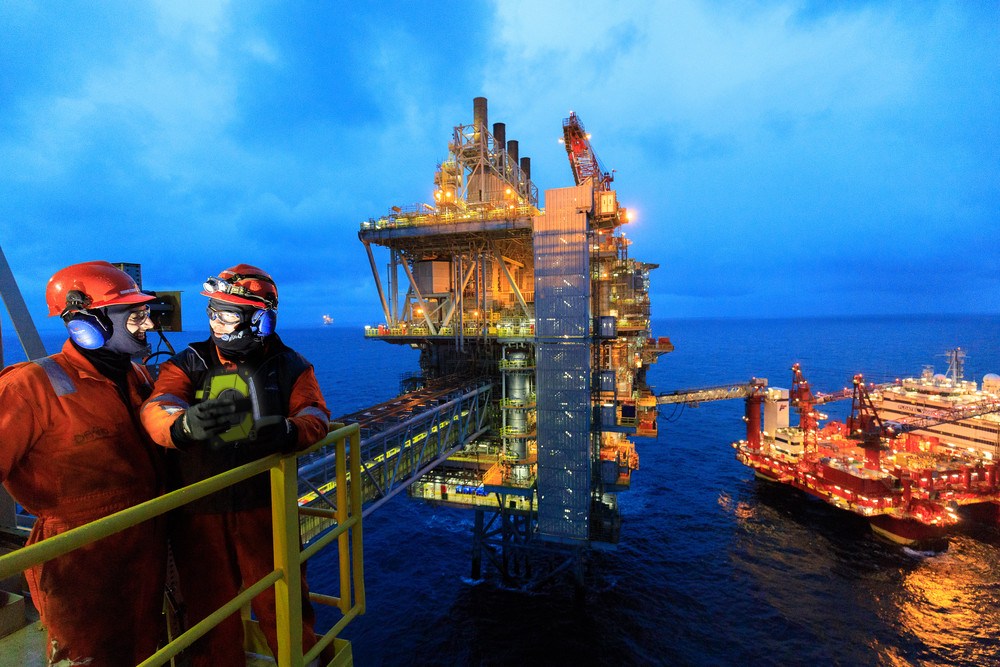
 Clair Ridge platform, West of Shetland in the North Sea — one of BP's largest and long-running operations.
Systems Thinking Service Design

Risk Toolkit
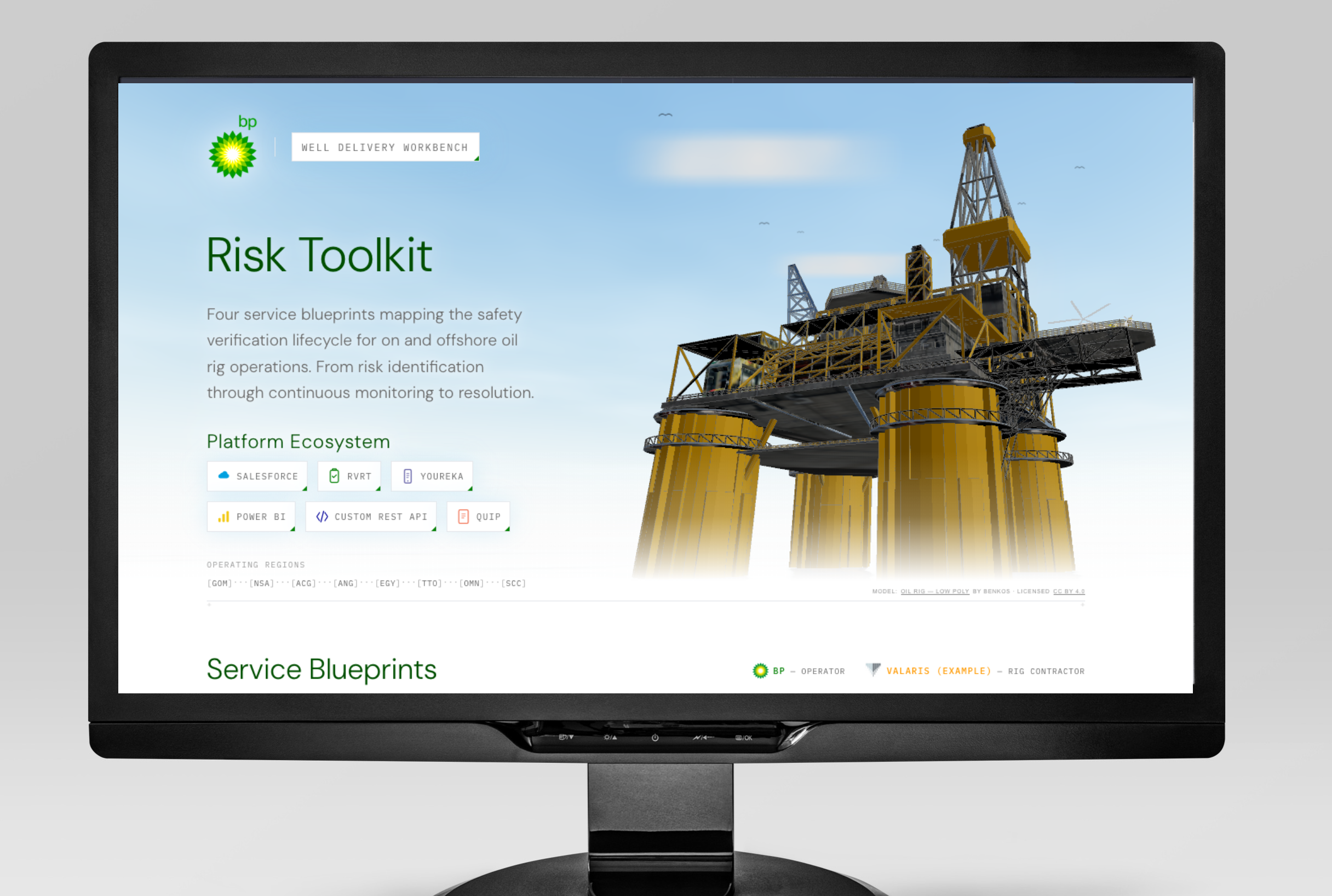
Interactive service blueprints of BP’s offshore rig-verification process.
BP’s Risk Toolkit is four safety apps, each covering a phase of the same job: assessing risk before a well starts, verifying the rig, monitoring active operations, tracking issues over time. Each team could run its own app without a clear picture of what the others did. Myself included: I was brought in on Rig Verification, the most field-intensive of the four, where personnel spend 24 to 36 hours on offshore platforms inspecting equipment and safety systems before drilling begins.
Live Links
Risk Toolkit Landing Page
Interactive Service Blueprints
One Map of the Whole Process
I interviewed both sides: the safety teams who board the platforms, and the developers who built the app on Salesforce. One side knew what happens on the rig, and the other knew what happens in the system. I mapped every step, who performs it, what it produces, which checks run separately and which run together, and where work passes between BP and the rig operator. BP leases the rigs, so nearly every phase crosses between at least two companies.
The app stored every step but never showed how they connect. The blueprint is the first place anyone, on any of the four teams, could see the whole process at once.